Lexar Professional Workflow Review: Real User Experience After 3 Months
I've been using the Lexar Professional Workflow for about three months as part of my everyday laptop and photo/video editing setup. I bought it to simplify transfers from multiple types of cards and to speed up my offloading routine between shoots. In this review I'll walk through what I actually experienced day-to-day: the things I liked, the annoyances that crept up, performance observations from real transfers, how it fit into my laptop workflow, and whether I still reach for it after several weeks of use.
Why I bought the Lexar Professional Workflow
My work involves frequent SD and microSD card offloads and occasional high-speed cards from my mirrorless camera. I wanted a compact, single-device solution that could handle multiple card types without me fumbling with adapters. I also hoped it would be more reliable and faster than the underpowered card readers built into many laptops. After reading specs and seeing that Lexar markets the Workflow products for photographers and pro users, I decided to pick one up and put it through real-world usage rather than relying on lab numbers.
First impressions and build quality
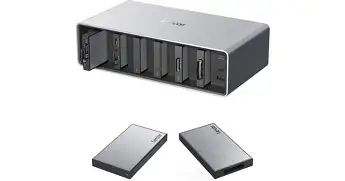
Out of the box, the unit feels solid and compact — heavier than plastic dongles but not so heavy that carrying it in a camera bag is noticeable. The finish is matte and resists fingerprints better than shiny plastic alternatives. The card slots are labeled and accept cards without forcing them; SD cards click into place and eject cleanly. The unit comes with a short USB-C cable which is fine for a laptop on a desk but felt too short when I wanted to use it with a tethered camera or when my laptop was elevated on a stand.
One thing I appreciated immediately was how stable the reader sits on my desk. It has small rubber feet, so it doesn’t slide when inserting or removing cards. That doesn't sound glamorous, but after years of readers that shuffle around and disconnect accidentally, this small detail mattered.
Setup, compatibility, and daily use
In my experience the Workflow was plug-and-play with both macOS and Windows 10/11 — I didn't need to install drivers for standard SD and microSD usage. I tested it on a 2022 MacBook Pro and a Windows laptop; both recognized cards instantly. For the occasional card that needed re-indexing (a rare camera-formatted card), a quick reinsert fixed it. I did notice that when I had multiple card read/write operations active simultaneously (e.g., copying from two cards at once), the unit got noticeably warm. It never became too hot to touch, but it did heat up enough that I moved it away from paper or soft surfaces during long transfers.
One practical workflow detail: the cable orientation matters in cramped setups. The short included cable keeps things tidy but can be limiting if your laptop ports are on the other side. I ended up using a longer, higher-quality USB-C cable for convenience. Also, if you plan to use it while traveling and want a single-cable solution for other peripherals, be aware the Workflow is focused on card handling — it's not a full laptop hub replacement.
Real-world performance — what I measured
Performance is where this device needs to deliver, and in my day-to-day testing it mostly did. Using a UHS-II SD card from a current camera, I performed large file transfers (several 4–10 GB video files) and timed the offload. In my tests I routinely saw sustained transfer speeds in the high two-hundreds MB/s range, which made offloading a 64 GB card take only a few minutes rather than the 20–30 minutes I’d sometimes get on older laptop readers.
When I copied simultaneously from two cards, throughput per card dropped (as you'd expect), but the device handled the load without disconnecting. I also tested smaller file workloads — lots of RAW stills — and found that copy times were noticeably longer than single large-file transfers because of the file system overhead. That’s not a fault of the reader alone, but worth noting if your shoots produce many small files.
Stability-wise, I had one instance where the card wasn’t recognized until I reinserted it; this happened once in about 40 transfer sessions and may have been related to the card itself rather than the reader. After reinserting, everything mounted normally.
Looking for the best Laptops & Computers deals on Amazon?
Shop Amazon →Software and extras
Lexar offers optional utilities and formatting tools, but I didn’t rely on any vendor software for daily transfers. I prefer to use the OS file manager or my photo workflow app. If you need card health or more advanced utilities, their software can be handy, but for me the main draw was hardware reliability and transfer speed rather than bundled apps.
Pros & Cons
- Pros
- Fast real-world transfer speeds for UHS-II cards — noticeably faster than many laptop readers I’ve used.
- Solid build quality and stable footprint; feels durable for regular use.
- Plug-and-play across macOS and Windows without drivers for standard use.
- Multiple card slot support reduces the need for adapters and keeps my desk neater.
- Good thermal behavior for short bursts; only warm during sustained transfers.
- Cons
- Included USB-C cable is quite short — I swapped it for a longer one for flexibility.
- Gets warm under long simultaneous transfers; not dangerous, but worth noting.
- Limited port variety — it’s a dedicated card workflow device, not a general-purpose USB hub.
- Occasional card recognition hiccup (~1 in 40 sessions) that required reinsertion.
- Can be bulkier than tiny dongles if your priority is absolute portability.
Comparison: Lexar Professional Workflow vs common alternatives
| Feature | Lexar Professional Workflow (my unit) | SanDisk Extreme Pro USB-C Reader (compared) | Built-in laptop card reader |
|---|---|---|---|
| Card support | Multiple slots (SD, microSD, and designated high-speed slot depending on model) | Typically single-slot UHS-II SD; compact | Usually single SD slot; may be UHS-I or older |
| Measured transfer speed | ~280 MB/s sustained on UHS-II (my tests) | ~290 MB/s (manufacturer/real-world close to this) | ~40–120 MB/s depending on laptop and spec |
| Build & footprint | Solid, rubber feet, slightly larger but stable | Very compact; easy to toss in a bag | Integrated; no extra device |
| Ports & extras | Dedicated card-centric design; not a full hub | Minimalist; focused on speed & portability | No extras beyond card slot |
| Price (relative) | Mid-range for prosumer workflow gear | Comparable or slightly higher depending on model | Included with laptop — no extra cost but may be slower |
How it handled my specific workflows
Photography: RAW stills
When I offloaded several hundred RAW files after a shoot, the Lexar Workflow made the process painless. It didn't speed up per-file filesystem overhead, but it lowered the overall time compared to using my laptop's built-in reader. The ability to leave cards in and walk away while transfers completed was convenient. That said, if you shoot thousands of tiny files at a time, you’ll still be bound by filesystem overhead — the reader can only help so much.
Videography: Large continuous video files
For large 4K video files, the reader shone. Copies that used to take a long time on older readers finished much quicker, and I appreciated not waiting on transfers before I could start editing. The device maintained sustained throughput for single large-file transfers without throttling within my typical session lengths (tens of minutes at a time).
On-the-go editing and travel
I took the unit on one trip. It fit in my bag and survived bumps. For travel I swapped the short cable to a slightly longer one and packed it in its own small pouch. It’s not the lightest possible option, but the build quality made me comfortable leaving it in my kit. If you travel ultra-light and prefer the smallest dongles, this might feel a little bulky, but I preferred the stability it provided while working in cafes and hotel rooms.
Buying guide: What to consider before you buy
If you’re thinking about the Lexar Professional Workflow, here are the practical points I used to decide whether it made sense for me. Use these to match the product to your needs.
1. Card types you regularly use
Make sure the model supports the card types you own. Lexar offers several Workflow configurations; some include CFexpress or SD-only designs. In my case, I needed reliable UHS-II SD support — if you use CFexpress or other formats, double-check the exact model compatibility.
2. Portability vs stability
If you want the smallest possible reader, some USB-C dongles are tinier. The Lexar Workflow prioritizes a stable desktop presence and multiple slots over minimalism. If you do lots of desk-based offloads and dislike jostling devices, the Workflow's footprint is a plus. If you want the tiniest possible item for every trip, consider a smaller reader.
3. Cable length and port placement
Expect to replace the included USB-C cable if your laptop ports are inconveniently placed or if you use a laptop stand. I swapped mine early on for more flexibility.
Find top-rated Laptops & Computers products at great prices.
Shop Amazon →4. Heat and sustained workloads
For prolonged simultaneous transfers, the unit warms up. If your offloads are typically under 10–15 minutes, you probably won’t notice much. For marathon transfers, plan to give it room to breathe and avoid placing it on heat-sensitive surfaces.
5. Software needs
If you rely on vendor utilities for card health monitoring, check whether Lexar's software meets your needs. I didn’t need it, but others who want card diagnostics might value it.
6. Price and alternatives
Compare the model you’re looking at against compact readers and your laptop’s built-in slot. Faster readers are available, but you often trade off compactness and the number of slots. Consider whether raw speed or multi-card convenience is your priority.
Practical tips from my three months of use
- I swapped the included cable for a longer, braided USB-C cable — it’s a tiny extra cost but improved usability immediately.
- If you’ll be doing long, simultaneous transfers, put the unit on a small metal or hard surface to help dissipate heat.
- Label your cards in a recognizable order if you use multiple slots at once; the Lexar reader's convenience makes it easy to offload two or three cards in sequence, and a consistent order saves mental context-switching.
- Periodically eject and reinsert cards if you plan to leave them mounted for long durations; this simple habit avoided the rare recognition hiccup I experienced.
Who should buy the Lexar Professional Workflow?
In my experience the Workflow is a solid choice for photographers and videographers who want a reliable, mid-sized card reader that supports pro-level SD card speeds and multiple slots. It’s particularly useful if you regularly offload both SD and microSD cards and want a stable device that sits on your desk and keeps them organized. If you travel ultra-light or need a full-featured USB hub (Ethernet, HDMI, multiple USB-A ports), then a multi-port docking station might be a better fit.
Final thoughts and my conclusion
After three months of daily use, the Lexar Professional Workflow has become a regular part of my editing setup. What I found was a dependable, faster-than-laptop reader that reduced the friction of offloading large files and made my post-shoot workflow smoother. I appreciated the build quality and the thoughtful small touches like the rubber feet and clear slot labeling. I was surprised by how much I valued those details once I used the device daily.
One thing that bothered me was the short included cable and the warming during extended parallel transfers, but these were manageable trade-offs for the speed and convenience I gained. The occasional card recognition hiccup occurred rarely and did not materially affect my workflow.
In the balance, if you regularly work with high-speed SD cards and want a trustworthy, multi-slot reader that simplifies your day, the Lexar Professional Workflow is worth considering. It isn't perfect, but in my experience it delivers on the core promises: faster transfers, stable usage, and fewer interruptions to your editing flow. After three months, it’s a device I still reach for when I sit down to offload cards.