Scansnap Ix1300 Review: Real User Experience After 3 Months
Category: Laptops
Introduction — Why I Bought the Scansnap Ix1300
I've been scanning documents at home for years with a cheap all-in-one printer and a slow, clumsy sheet feeder. After finally deciding to go paper-light, I bought the Scansnap Ix1300 and have been using it for three months. In that time I've scanned receipts, contracts, family photos, and a backlog of tax paperwork. I wanted a dedicated desktop scanner that would reliably handle batches, produce searchable PDFs, and not demand a lot of fiddling every time I needed to digitize something.
What I found was a mostly polished, fast, and thoughtful product with a few rough edges that mattered in day-to-day use. Below I walk through setup, daily workflow, software, reliability, specific annoyances I ran into, and who I think this scanner is (and isn’t) for.
Unboxing and Setup
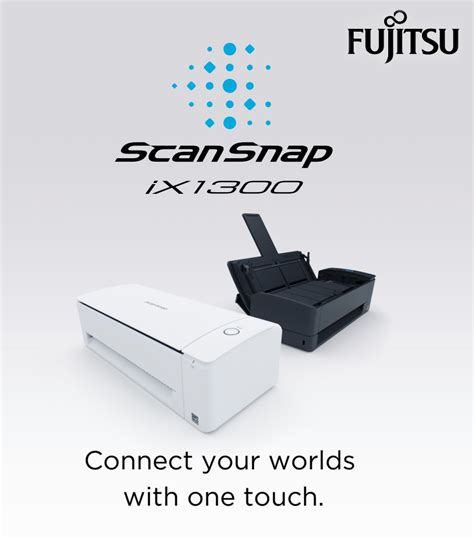
Right out of the box, the Ix1300 felt compact and relatively lightweight. I set it up on my home office desk and appreciated that it doesn't take up as much real estate as the old multifunction printer. The physical footprint is small enough to live next to my laptop without feeling invasive.
Setup was straightforward in my experience. I connected it via Wi‑Fi (I tested it on both macOS and Windows during the trial) and installed the ScanSnap Home software. The initial Wi‑Fi pairing required the usual password entry and a short firmware update; that update took a few minutes but nothing unexpected. After the firmware update the scanner registered on both machines without me having to repeat the pairing process.
One setup quirk: on one machine the ScanSnap Home software asked me to create an account for cloud features before letting me configure a few advanced settings. That wasn’t a dealbreaker, but it felt like an extra step I didn't need for local use.
Design and Physical Handling
The Ix1300 has a clean, minimal design with a small touch panel. The front-loading automatic document feeder (ADF) accepts stacks of paper and the output tray flows into a neat curve so stacks don't scatter. The feeder isn't huge — it's meant for desktop use rather than heavy-duty office work — but it handles moderate batches comfortably.
I liked how the paper path is accessible for clearing jams and cleaning. There's a small plastic lever that opens the feeder for access, and the feed roller is easy to reach with a microfiber cloth. The build doesn't feel flimsy, but it's not industrial. If you plan to run hundreds of pages daily, you might notice some wear sooner than with an enterprise model.
Daily Use and Workflow Experience
My everyday scanning workflow fell into two camps: single documents (a contract, a single receipt) and batch scanning (a box of old bank statements or tax receipts). The Ix1300 handled both use cases well.
For single documents, I liked the one-touch operation. The hardware button plus ScanSnap Home's quick profiles made it fast to convert a single page into a searchable PDF and send it to a folder or cloud location.
Batch scanning is where this scanner shines for a home user. I regularly fed 20–40 pages at a time and the feeder handled mixed sizes and weights reasonably well. I did notice a double-feed or misfeed maybe once every 100–150 pages during the three months — it happened more often with thin receipt paper or very glossy photo paper. When double-feeds occurred the software flagged the scan and gave an option to re-scan the problem pages. That detection isn't perfect, but it saved me from creating multi-page scans with missing content.
Discover deals on Laptops & Computers — updated daily.
View Offers →Noise level is low to moderate. It’s not silent, but it doesn’t sound like an old laser printer waking up either. In my quiet home office it was noticeable but not disruptive.
Scan Quality and OCR
For text documents the results were excellent. The OCR is effective enough that I could search for phrases inside multi-year tax PDFs and find matches quickly. The text recognition accuracy was especially good for standard fonts and clean print. When I scanned older, faded documents or handwriting the OCR of course struggled — that’s expected — but the resulting image scans were clear and usable.
Color scans and photographs were decent for quick archiving. If you want high-end photo reproduction you'll still be better off with a flatbed photo scanner, but for digitizing photos to preserve memories the Ix1300 did an acceptable job. The defaults try to balance file size and quality; changing the scan profile to higher DPI or color profile is possible in the software if you need better fidelity.
Software, Integration, and Cloud
ScanSnap Home is the primary application that ships with the scanner. I found the app to be mostly polished and user-friendly. It organizes scans, lets you create profiles (for example: "Receipts to Dropbox," "Contracts to local folder"), and runs OCR. The profile system made repetitive tasks fast.
Cloud integration worked for me; I configured a folder to sync to my cloud provider and the Ix1300 could send scans there automatically. There were occasional hiccups where the software would prompt me to re-authenticate to a cloud account — this happened once every few weeks — but re-authenticating fixed it without data loss.
One thing I noticed: the software sometimes overzealously suggested splitting documents into separate files based on blank pages. It's helpful most of the time, but with forms that have purposeful blank pages it occasionally split in ways I didn't want. There’s an option to disable automatic blank-page separation which fixed the problem for my use case.
Reliability and Maintenance After 3 Months
After three months of fairly regular use I haven't needed to replace any consumables. I do wipe the feed roller periodically and run the software's calibration routine once in a while. The unit has been reliable — occasional misfeeds aside, there haven't been any hard failures.
Maintenance is simple: clean rollers and keep the document path free of dust. The removable tray and feed assembly make these tasks straightforward. If you let dust or paper debris build up you'll encounter more misfeeds, but regular light maintenance kept mine running smoothly.
What I Liked (Specifics)
- Quick batch scanning: feeding a stack and walking away produced clean, searchable PDFs without babysitting.
- Small footprint: it fits on a small desk and doesn't dominate the workspace.
- Good OCR: searchable PDFs were accurate for printed documents, which saved hours when organizing paperwork.
- Thoughtful software profiles: creating and switching profiles cut down repetitive tasks.
- Easy maintenance: rollers and feed path are accessible for cleaning.
What Bothered Me (Specifics)
- Occasional misfeeds with thin or glossy paper: receipts and photos sometimes needed re-scanning.
- Cloud re-auth prompts: every few weeks I had to re-authorize the cloud connection, which interrupted automated flows.
- Default blank-page splitting: the auto-splitting behavior required a settings tweak for some document types.
- Not ideal for high-fidelity photos: good for archiving, but not for professional photo scans.
Pros & Cons
- Pros:
- Fast and efficient batch scanning for home and small-office use
- Compact design that fits easily on a desk
- Accurate OCR for printed documents
- Simple maintenance and accessible paper path
- Good software profile system that saves repetitive steps
- Cons:
- Feeds can struggle with very thin receipts or glossy photos
- Cloud re-authentication prompts are occasional friction
- Not a replacement for a flatbed photo scanner when image fidelity is critical
- Feeder capacity is modest compared to enterprise devices
Comparison Table — Scansnap Ix1300 vs My Old All-in-One
| Feature | Scansnap Ix1300 | Old All-in-One (my previous device) |
|---|---|---|
| Batch scanning | Reliable for 20–40 pages with occasional thin-paper issues | Slow, required frequent paper feeding and more jams |
| OCR quality | Accurate and fast for printed text | Poorer OCR; required manual corrections |
| Footprint | Small and desk-friendly | Bulky, printer-first design |
| Photo scans | Good for casual archiving, not professional-grade | Inconsistent color and clarity |
| Maintenance | Easy access to rollers and feed path | Harder to clean; required more frequent trips to settings menus |
Buying Guide — How to Decide if the Ix1300 Is Right for You
Here are the practical questions I asked myself before buying and the answers based on my three-month experience. Use these as a checklist so you don't end up with a scanner that doesn't fit your workflow.
1. How many pages will you scan per week?
If you’re scanning small batches occasionally (a few dozen pages a week), the Ix1300 is a very good fit. If your workflow is hundreds or thousands of pages per week, consider an office-grade or production scanner with higher feeder capacity and more robust internals.
Looking for the best Laptops & Computers deals on Amazon?
View Offers →2. Do you need photo-quality scans?
If your priority is professional photo reproduction for prints or restoration, this isn't the right device. For archiving family photos or casual color scans, it performs well enough. I used it to archive old photo prints and was satisfied for digital preservation, but I wouldn’t use it for gallery-level reproduction.
3. Is searchable OCR a requirement?
Yes? The Ix1300 performs very well. In my experience the OCR saved hours when organizing receipts and contracts. If you need perfect OCR for handwriting-heavy documents, no consumer OCR is flawless — plan for some manual checking.
4. How important is portability vs. permanence?
The Ix1300 is compact but not designed for constant travel. If you want a portable scanner for on-the-go scanning, look for a smaller, sheet-fed portable model. For a stable home desk scanner that lives in one spot, the Ix1300 fits well.
5. What software integrations do you require?
Consider what cloud services and local workflows you rely on. The ScanSnap software integrates with common clouds and folders, but if your workflow uses a niche or self-hosted system you might need additional scripting or manual moves. I used it with a standard cloud folder and also indexed scans locally without issues.
6. What's your tolerance for occasional fiddling?
If you want a scanner that you absolutely never touch after initial setup, look at higher-end office models. The Ix1300 is low-maintenance, but every few weeks I adjusted settings, cleaned rollers, or re-authenticated cloud access.
Final Thoughts and Conclusion
After three months with the Scansnap Ix1300, I can say it's been a meaningful upgrade from my previous ad-hoc scanning setup. In my experience it made the chore of digitizing paperwork manageable: batch scans that used to take me an hour now take a fraction of the time thanks to solid feeder reliability and good OCR. The compact design and user-friendly software made it easy to integrate into my daily routine.
That said, it’s not flawless. Thin receipts and glossy photos can cause occasional misfeeds, and the software sometimes nudges you into cloud re-authentication or unwanted auto-splitting. None of those issues broke the scanner for me, but they were real annoyances that required a tweak or two.
If you’re a home user, freelancer, or small-business owner who needs dependable, fast scanning and searchable PDFs without the size and cost of an enterprise machine, the Ix1300 is very compelling in my experience. If you do heavy-duty scanning daily, need studio-level photo scans, or want a truly maintenance-free hard-working production scanner, there are more suitable options beyond the Ix1300.
Overall, I found the Scansnap Ix1300 to be a strong, practical tool that dramatically reduced the friction of going paperless. After three months of regular use it earned a permanent spot on my desk, and I reach for it whenever paperwork needs to become digital.